

I’ve been working with yeast and brewing for years, but I have to admit, I never stopped to think about the origins of one of the fundamental ingredients in brewing malt, or more specifically Wheat!. It wasn’t until Yusuf, (our Head of Production), came back from a holiday in Turkey that I first learned about Göbekli Tepe an ancient archaeological site, and the birth place of modern wheat. I found this fascinating and somewhat amazing, so thought to share how the mutation in a wild grass, has shaped human civilization.
Göbekli Tepe: The Temple That Came Before Towns
Nestled in southeastern Turkey, Göbekli Tepe is believed to be the world’s oldest known temple, built over 11,000 years ago. What makes it incredible is that it predates agriculture, permanent settlements, and just about everything we associate with civilisation. And here’s the kicker: some researchers believe the people who built it weren’t farmers, they were still hunter-gatherers, possibly brewing a basic kind of beer from wild grains long before they were baking bread.
Wheat: The Grain That Made Us Stay


Early humans gathered wild emmer and einkorn wheat, ancient varieties found growing on the hills of modern-day Turkey, Syria, and Iraq. These grains were tough, small, and inconsistent. But somewhere along the line, something extraordinary happened. Humans started selecting wheat that didn’t shatter, that is, the grains stayed on the stalk instead of scattering to the wind. This small genetic change (some believe it was a random mutation in wheat) meant more efficient harvesting, bigger yields, and, eventually, stable food supplies. With wheat you could store, trade, and ferment, civilisation had the fuel it needed to ignite. Stable food supplies meant people could store food, plan for the future, and stay in one place. In short: wheat helped build civilisation. It fed communities, created trade, and yes, it gave us beer.
From Ancient Grains to Modern Brews
While most modern beer is made from barley, wheat still plays a key role in many classic beer styles, hefeweizens, witbiers, and Belgian wheats, just to name a few. These beers celebrate the smooth texture, hazy appearance, and soft flavour wheat brings to a brew. If you’re experimenting with wheat beers, our Munich strain is a great choice (shameless plug for our product), it brings that signature banana-clove character to life, with a soft finish and excellent fermentation performance. It’s become a favourite for breweries looking to balance tradition with flavour clarity. It’s wild to think that the grains used in those beers trace back to the same hills where Göbekli Tepe stands, a place I’d never even heard of until Yusuf went on holiday. The photos are from Yusuf’s holiday! If you want to geek out a bit more on Wheat and Göbekli Tepe there is a great 10min doc on You tube here. https://youtu.be/zqU7i3XPz1Q?si=V3dBAiyBkM_CWsvn
Zinc, Yeast Health, and Brewing Wins
Speaking of beer and progress, it’s been an exciting month on the home front too. We’ve been basking in the shared glow of our amazing brewers’ achievements at the AIBA 2025 awards. Watching so many of you walk away with medals and recognition has been a real highlight. It’s a testament to the creativity and technical excellence alive in our brewing community. One standout we’ve noticed is the growing uptake of zinc supplementation in breweries. It’s making a real difference, from faster fermentations and happier yeast to cleaner profiles and real cost savings. If you haven’t explored zinc yet, now’s a great time to learn more about how it can improve fermentation performance across a range of styles. 👉 Want to know how zinc can help your yeast work smarter, not harder? Click here to learn more.
A New Perspective, Thanks to an Old Site
Learning about Göbekli Tepe reminded me how much history we miss out on here in Australia. Our landscape is rich and ancient, but the story of agriculture and beer begins half a world away, in the hills of southeastern Turkey. It’s humbling to think that the beer styles we enjoy today were made possible by small shifts in wheat thousands of years ago, and that those changes helped build everything from temples to towns. So the next time you sip a wheat beer, raise your glass not just to good brewing, but to the ancient farmers, temple builders, and yes, even holidaymakers like Yusuf, who help us rediscover the deep roots of what we do every day.
For the Homebrewers: Mashers, Meetings, and Melodic Mayhem 🎸
It was a real treat to recently attend the Merri Mashers homebrew club meeting hosted by the crew at Subculture Brewing. There’s something special about hanging out with passionate brewers who are pushing boundaries, and tasting that “Onion Beer” was an experience I won’t forget in a hurry (in a good way!). We’re also stoked to be sponsoring the Merri Mashers Head-to-Head Comp 2025: BATTLE OF THE BALANCE! happening Thursday, July 17 at the Clifton Hill Brewpub. This year’s comp is a four-way face-melter, calling on 16 Merri Mashers to hero one of beer’s elemental forces: MALT, HOPS, YEAST, or ACID. You don’t get to pick, you’ll be randomly assigned your weapon of choice and have to brew a beer that makes it sing. THE CHALLENGE: It’s not a SMASH comp anymore, it’s a style-smashing showdown. Your job? Make your assigned balance element the solo act, with finesse, flavour, and flair. We’re proud to be supplying yeast for the comp, alongside our mates at Voyager Craft Malt, who are providing the base malt. It’s going to be loud, it’s going to be bold, and it’s going to be one hell of a showcase of brewing talent. See you there!
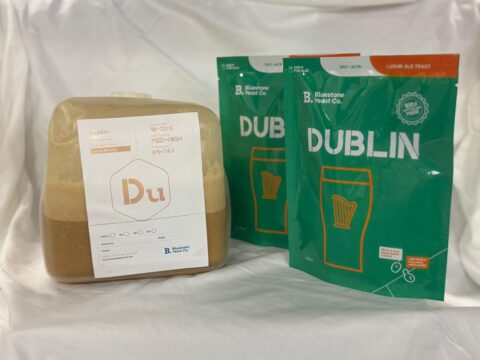
Strain Highlight: BSY-A016 Dublin, Raise a Pint to Authenticity in Dry Irish Stouts
There’s nothing quite like the smooth, roasty character of a dry Irish stout to warm your spirits. This iconic style, defined by roasted barley, a creamy mouthfeel, and balanced bitterness, has stood the test of time, both in pubs and on taprooms around the globe. And whether you’re brewing at home or producing at scale, now is the perfect time to embrace it. Our BSY-A016 Dublin yeast strain has become the go-to choice for professional brewers across Australia and New Zealand looking to craft a Guinness-style stout with precision and consistency. This strain is trusted in commercial breweries because it delivers repeatable, authentic results: clean attenuation, a crisp dry finish, and just the right level of subtle esters to elevate, never mask, the roasted malt character. BSY-A016 Dublin isn’t just ideal for large-scale production, it’s also a hit with ambitious homebrewers aiming to recreate the pub experience in their own garage setups. Why Brewers Keep Coming Back to BSY-A016:
- Proven in the brewhouse: Commercial breweries report excellent performance and flavor balance.
- Estery restraint: Elevates chocolate and roasted notes without overwhelming them.
- Reliable fermentation: Robust attenuation with minimal fuss, even in high-gravity stouts.
As stout season peaks and drinkers lean into richer, darker styles, there’s no better time to lean into a classic. With BSY-A016 Dublin, you’re not just brewing an Irish stout, you’re brewing it right.
EOFY Promo, Homebrewers, This One’s for You!
EOFY SALE, 20% OFF all Homebrew Yeast Packs! 🔥
We’re celebrating the end of the financial year with a thank-you to our homebrew community. For the entire month of June, take 20% off all homebrew yeast packs from Bluestone Yeast. Whether you’re brewing for comps, experimenting with new styles, or just filling the fridge, it’s the perfect time to stock up.
🛒 Discount auto-applied at checkout
📅 Ends June 30
💻 [insert shop link here] 👏 Keep your yeast fresh and your fermentations flying! ✅ Looking to brew a world-class wheat beer? Check out our Munich strain here. ✅ Curious how zinc can improve your fermentations? Learn more about our zinc solution. ✅ Got a homebrew comp or collab idea? Get in touch, we love supporting the community.
Looking for the right yeast strain for your next brew? Browse our full strain catalogue or get in touch to discuss your brewery’s needs.