
Three weeks across England, Ireland and Spain, and it was 99% a family holiday. Three generations, about 60 relatives in Sligo, and a surprise party that deserves its own story. That leaves the other 1%. Any bar or bottle shop I walked past, I tried to grab a can or a sample. Here is what an Australian yeast supplier found, and did not find, on the bar.
The lay of the land
I went expecting the mother country of modern craft to be swimming in it. It is not.
The Society of Independent Brewers reports 137 UK breweries closed during 2025, a net loss of nearly three a week. There were 1,578 left on 1 January this year, down 250 from the peak of 1,828 in January 2023. SIBA chief executive Andy Slee is blunt about the cause: “The issue here is not one of demand, the issue is the tax burden on small breweries.” Around 80% of small brewery beer in the UK is sold through pubs, so when pub access tightens, the brewery has nowhere else to go.
Cask has gone the same way. SIBA’s own research puts cask drinking at 27% of UK beer drinkers, down from 35%. Among 18 to 24 year olds it is 11%, down from 25%.
Ireland is squeezed from a different direction. Killarney Brewing and Distilling closed with more than 50 jobs lost. Irish Water put charges up 9.8% last October, and water is a brewery’s single biggest raw material. Libby Carton of Kinnegar Brewing, who also chairs the Independent Craft Brewers of Ireland, told the Irish Times that the deposit return scheme alone costs Kinnegar 16,000 euro a year, “nearly the same as half of a decent job in a brewery.”
What was actually on the bar
Most of the pubs I ended up in across England were big chain houses, and the tap list told the story. A macro lager, a macro stout, a cider, and if there was anything positioned as craft, it was BrewDog.
Which is worth sitting with, because BrewDog is not what an Australian drinker probably thinks it is any more. On 2 March this year it went into a pre pack administration. Tilray Brands, a US cannabis and beverage company, bought the brand, the UK brewing operations and 11 brewpubs for 33 million pounds. Thirty eight bars closed the same day, with 484 redundancies. The 220,000 odd Equity for Punks crowdfunding shareholders, the people whose money built the thing, received nothing.
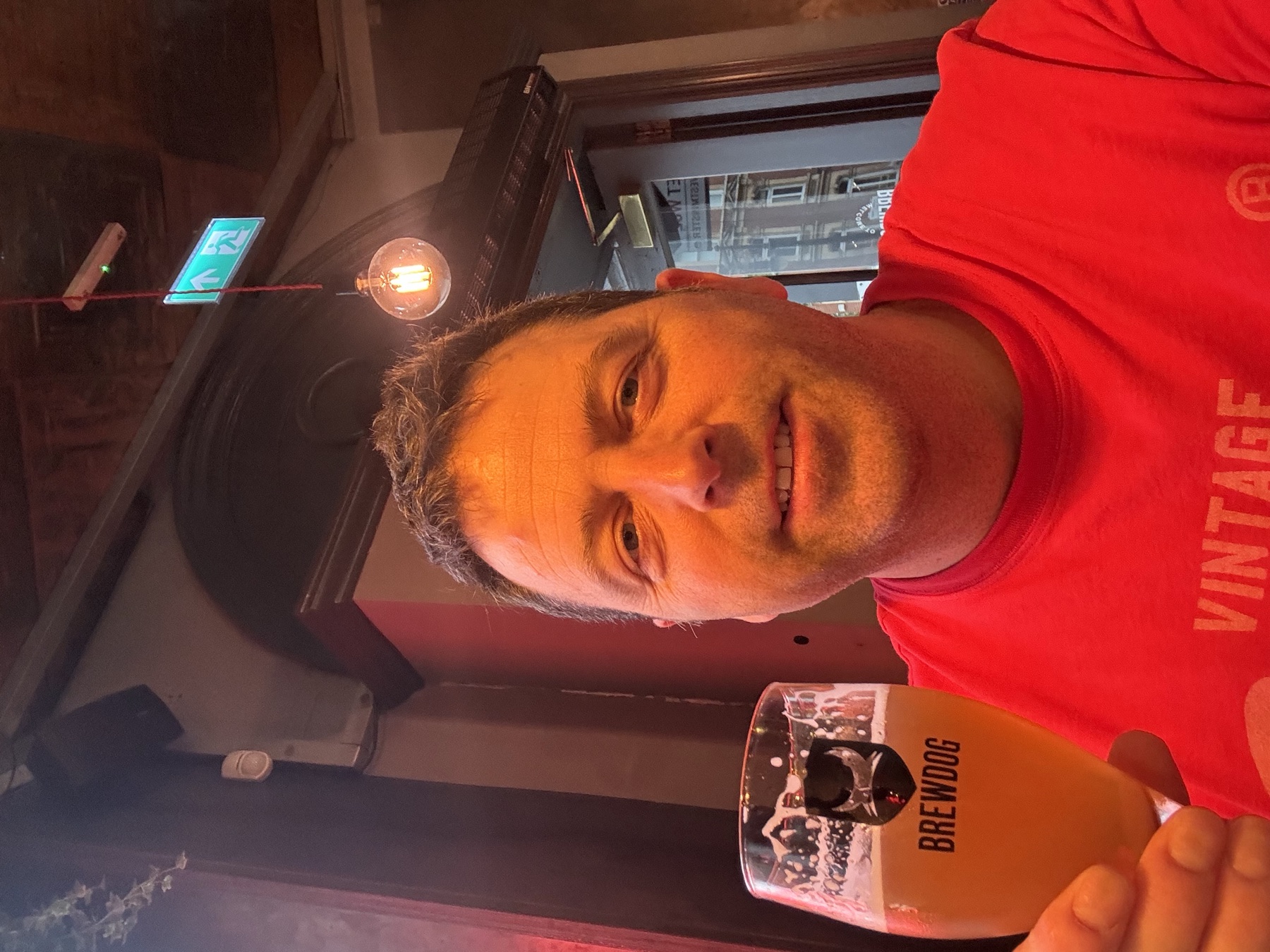
Inside one of the BrewDog bars still trading after the Tilray acquisition.
So the one “craft” handle on the bar of a chain pub in England now belongs to a US conglomerate, in a year when 137 independent British breweries went under. SIBA saw this coming and launched the Indie Beer seal in 2024 so drinkers could tell the difference. It is the same argument the Independent Brewers Association makes here with the independent seal, and standing at a bar in England is the clearest case for it I have seen.
Twelve breweries in twenty-one days
I kept a rough tally. Across three countries and a dozen or more towns, I drank beer from twelve independent breweries. That sounds respectable until you do the division.
It was not a selection. In most places it was the entire selection. Two or three independent cans in a fridge, and I bought one of each, because one of each was the whole range. That is what I mean when I say it was scarce. Not that I found nothing. That I found everything there was, and it fitted in a carry bag.
Almost all of it came from a fridge rather than a tap. Outside a dedicated taproom, craft on draught was close to non existent.
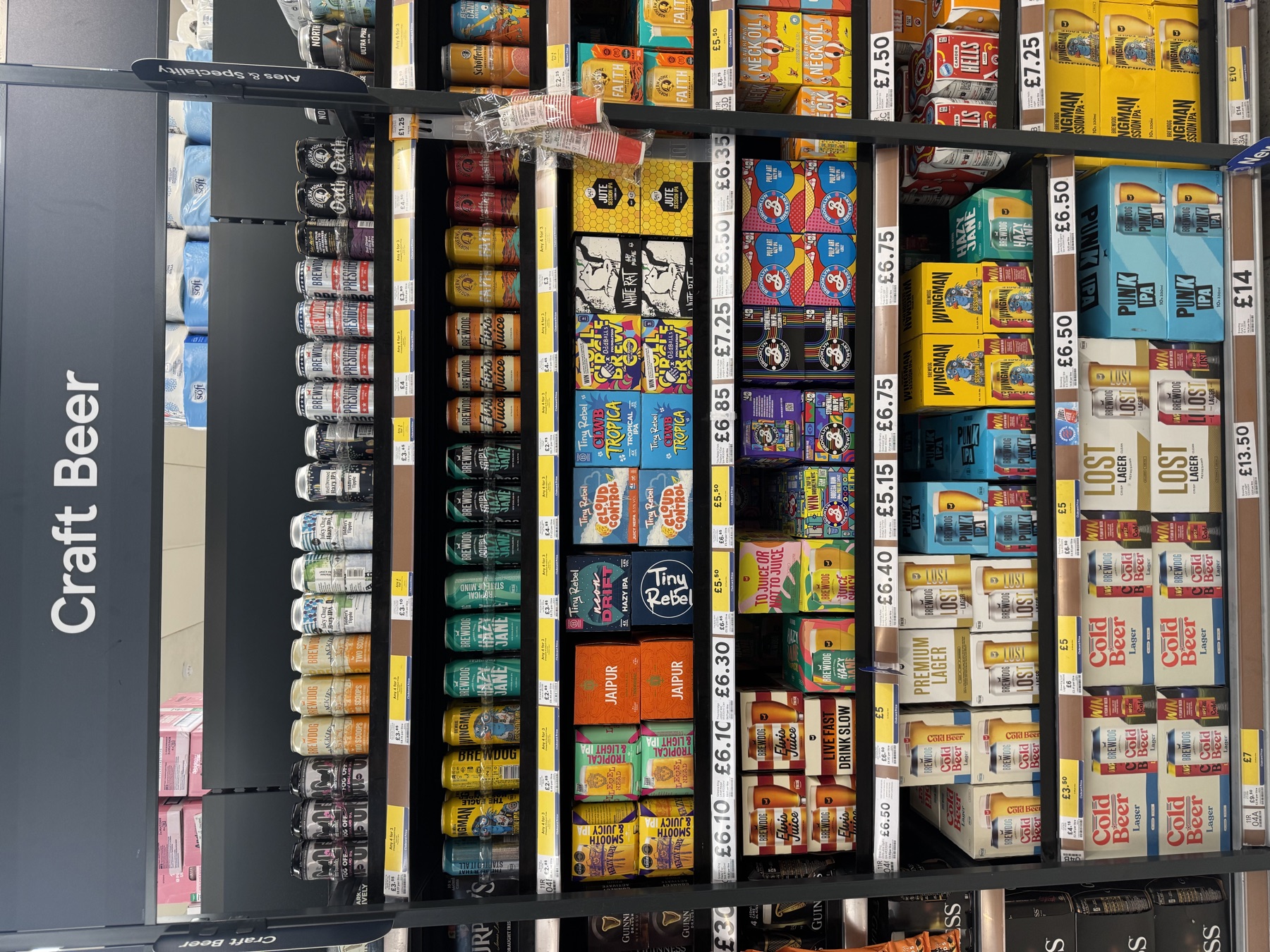
What was in those fridges was good. A supermarket craft bay had Northern Monk, Tiny Rebel and Thornbridge Jaipur, and next to it a no and low alcohol section running the full length of the aisle, from Guinness 0.0 to Lucky Saint to Athletic. That tells you something about where the shelf space has gone. A London bottle shop had handwritten signs promising fresh US beers, DIPAs and TIPAs. Northern Monk’s Transient hazy DDH IPA at 7% was as good as anything I have had at home. In Kent I drank Shepherd Neame’s 1698, a 6.5% bottle conditioned strong ale from a brewery founded in 1698 that calls itself Britain’s oldest.
The one place the tap list beat the fridge was Oxford’s Covered Market, which somehow has two brewery bars in it. Teardrop, run by Church Hanbrewery out in West Oxfordshire, and The Market Tap by Tap Social Movement. I got to both, and it was the only time on the English leg I had a genuine choice in front of me. Tap Social is worth knowing about: founded in 2016, it is a social enterprise that employs people serving sentences and people leaving prison, and about a third of its staff are ex offenders. A brewery with a reason to exist beyond the beer.
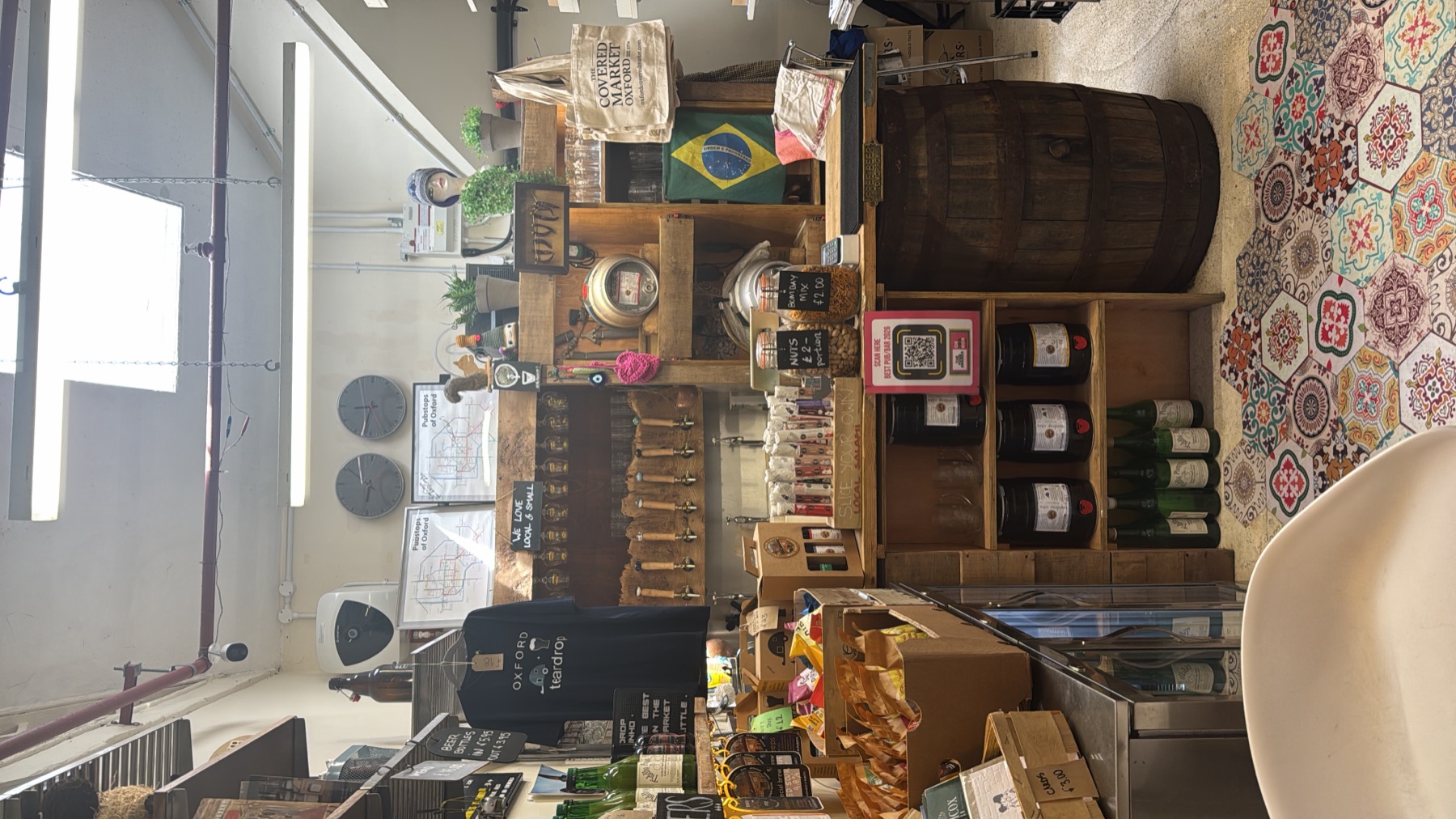
Teardrop in Oxford Covered Market, the one English stop where the tap list offered a real choice.
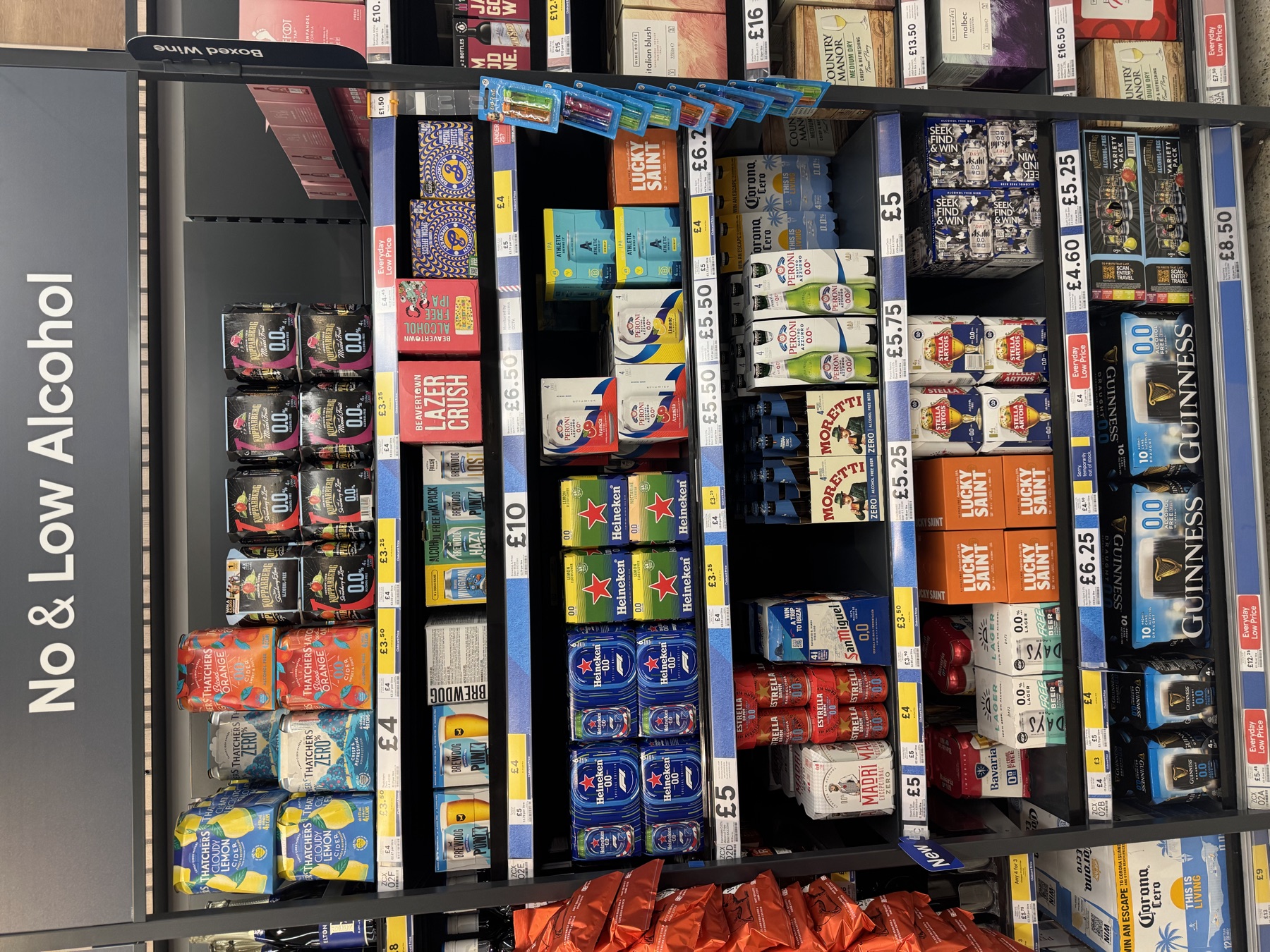
The no and low alcohol bay beside the craft shelf in a UK supermarket.
Ireland was a different country
Once we crossed over, the picture changed. Beer I would happily stock at home, and people proud to tell you about it.
The White Hag out of Ballymote in County Sligo, ten minutes from where we were based, poured a juicy pale called Magic Mist. Kinnegar’s Crossroads, a 6.2% American IPA from Donegal. Lacada’s Hazy Dazy up on the north coast, from a brewery in Portrush that is an actual registered co-operative with close to 400 member owners. Mourne Mountains in Warrenpoint brew a West Coast pale called Little Creatures, no relation whatsoever to the one in Fremantle, which took me a second look.
In Westport I found Mescan, started by two working vets, Cillian Ó Móráin and Bart Adons, brewing Belgian styles in the foothills of Croagh Patrick. Their Westport Blond took gold at Blas na hÉireann, the Irish food awards, last year. In Galway, at the Kings Head with a trad session going, Galway Hooker had Sixty Knots and Galway Girl on the taps, brewed at Oranmore by two cousins who have been at it since 2006.
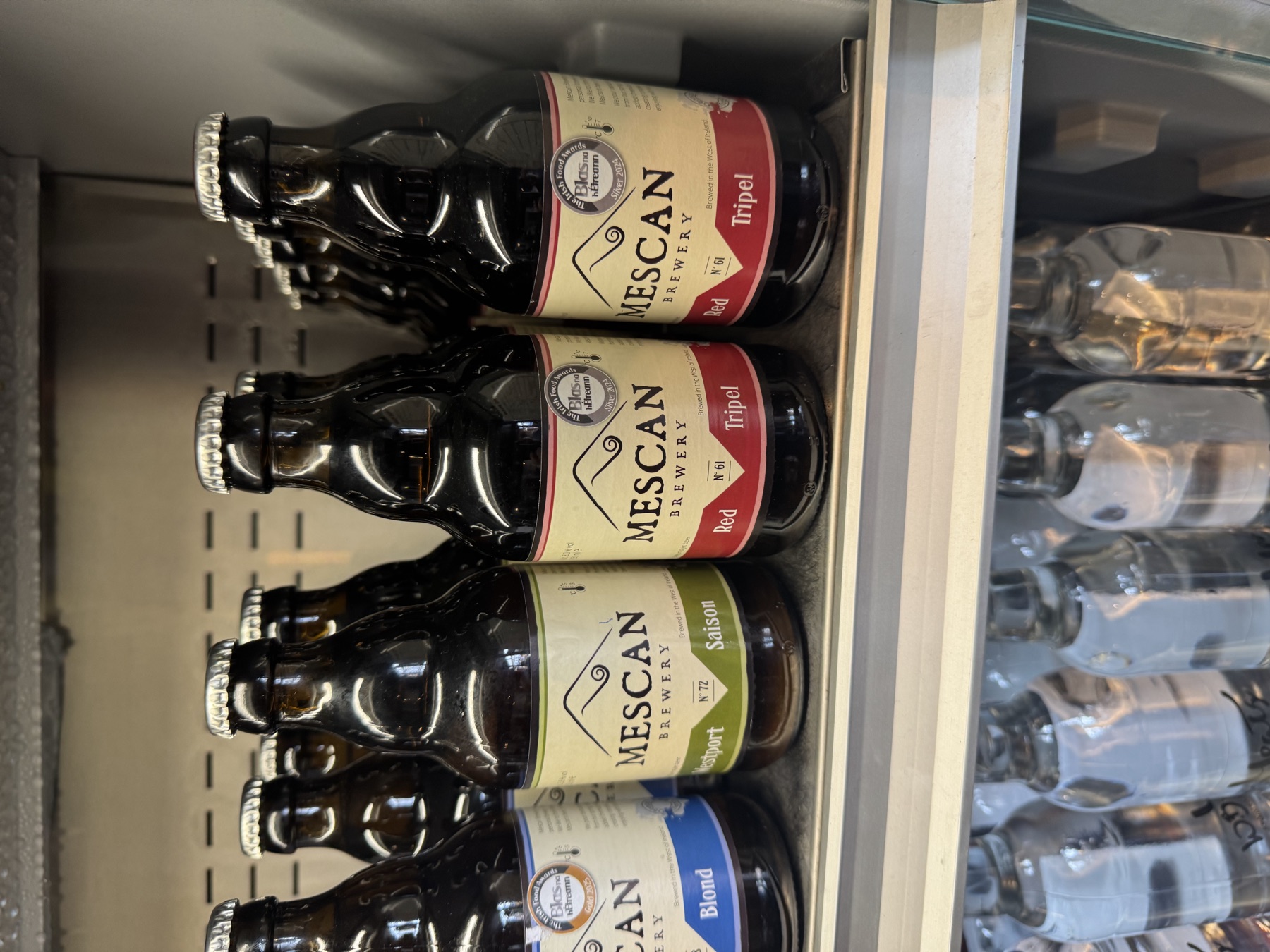
Mescan’s Belgian-style beers, brewed near Westport, with Blas na hÉireann award stickers.
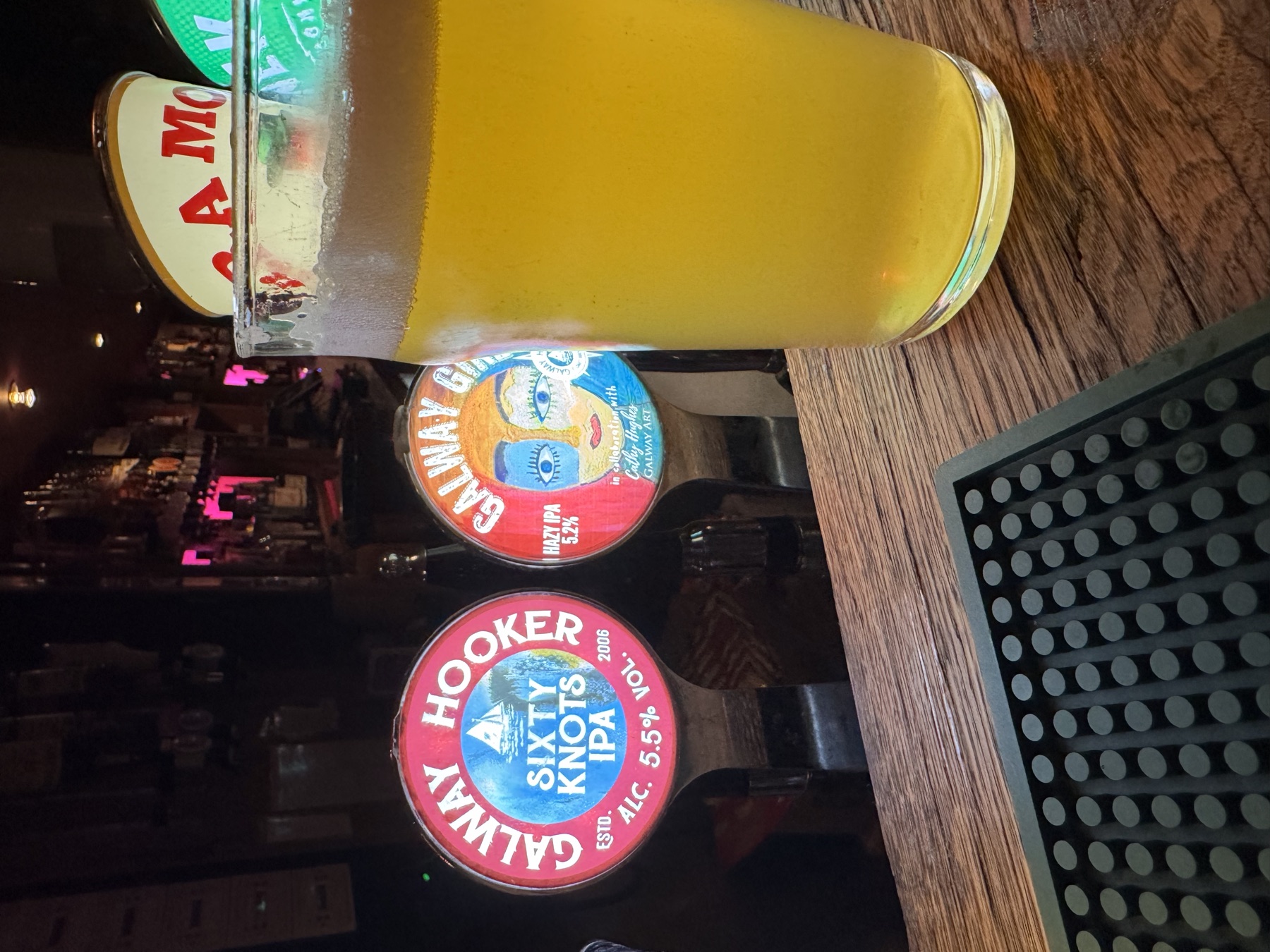
Galway Hooker on tap at The Kings Head in Galway.
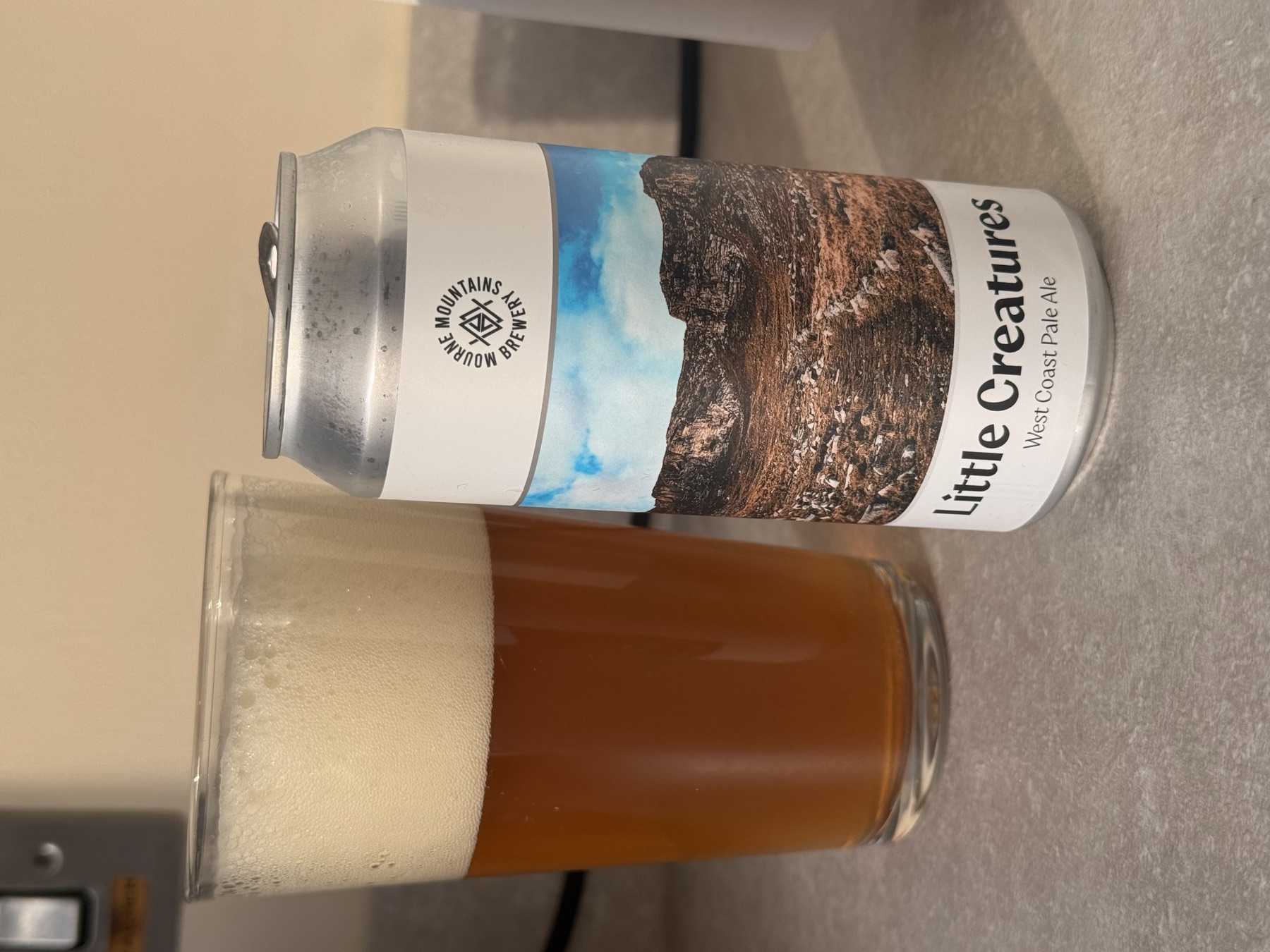
Mourne Mountains Brewery’s Little Creatures, no relation to the Fremantle brewery.
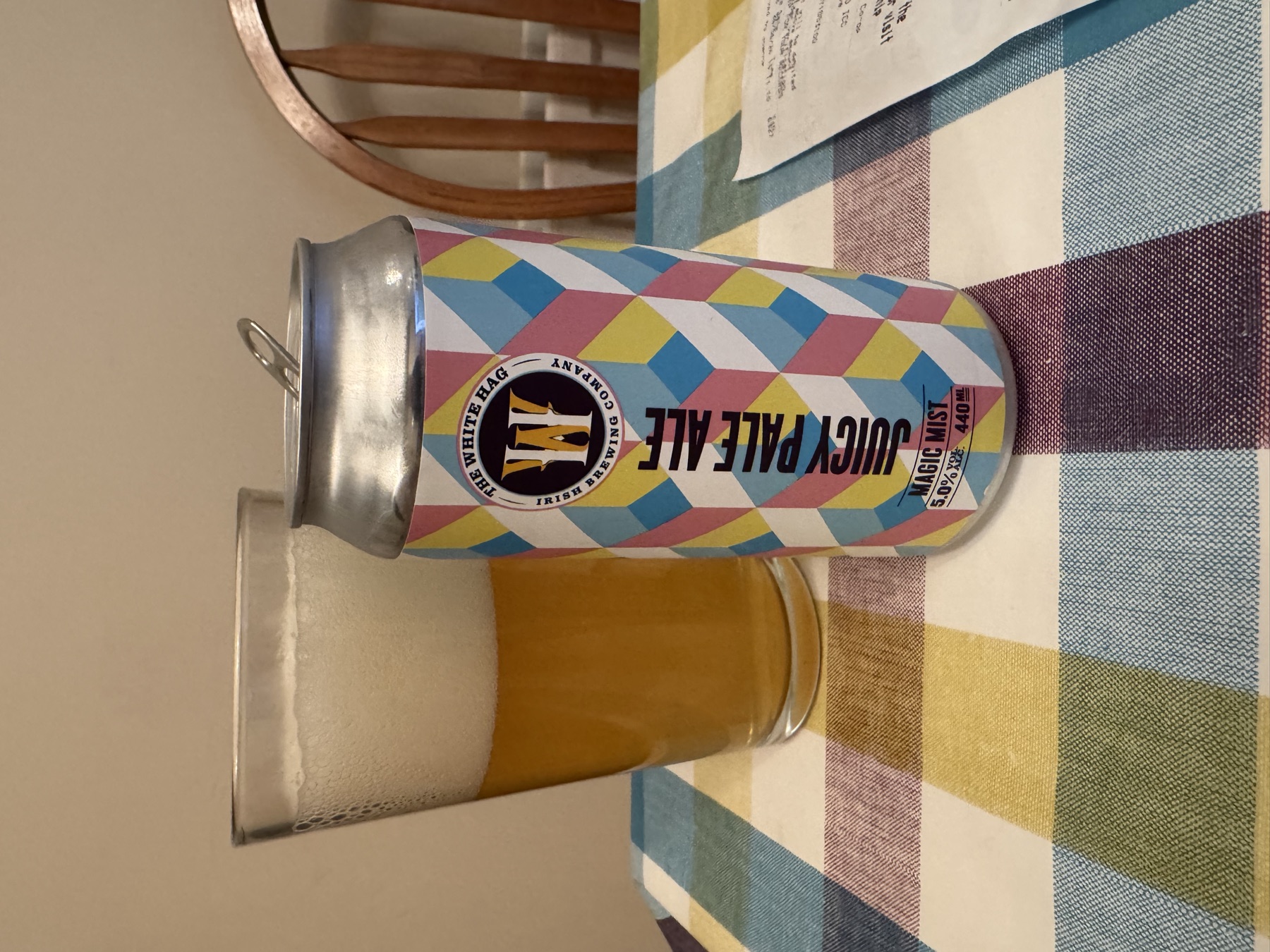
Magic Mist from The White Hag in County Sligo.
Two distilleries and one unanswered question
At Bushmills, after four hours on the cliff walk and an hour at the Giant’s Causeway, I had time for a dram and not much else. It was well earned. For the record, Bushmills ferments in ten stainless washbacks of around 60,000 litres each for about 50 hours, and that fermentation is where the apple and pear character everyone tastes in the whiskey actually comes from.
At the Shed Distillery in Drumshanbo, home of Gunpowder gin and the first whiskey laid down in Connacht in over a century, I did the full tour and asked my yeast questions. Nobody could answer them.
I do not say that as a criticism. It is the point. Every distillery tour in the world walks you past the fermenters on the way to the stills, and the stills get the copper and the drama and the photograph. The fermenters are where the flavour is decided. If you are a brewer or a distiller reading this, it is the same lesson either way.
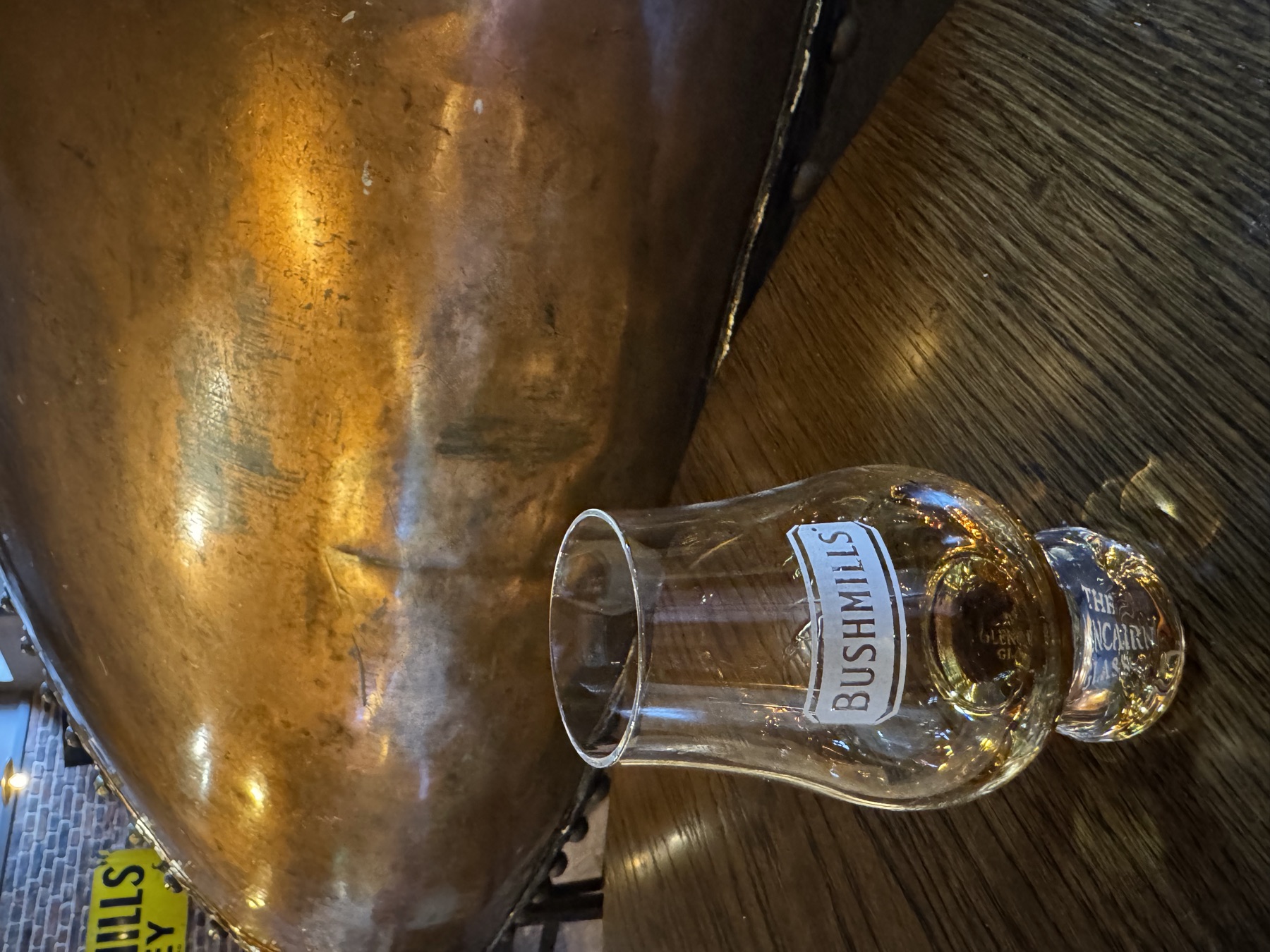
A Bushmills dram in front of the copper.
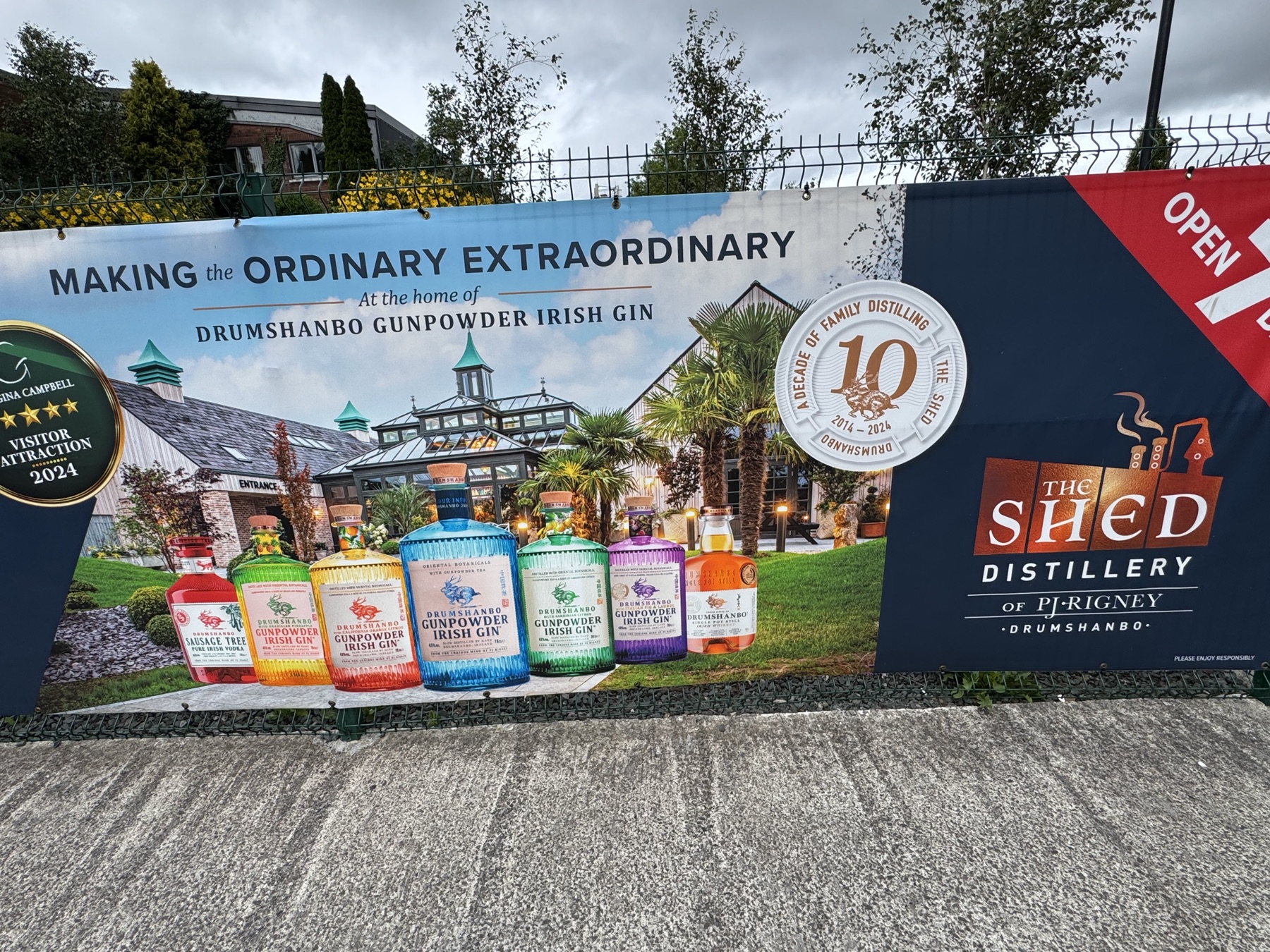
The Shed Distillery in Drumshanbo, where the tour left one yeast question unanswered.
Spain, and an honest admission
A week in Nerja, in the mid thirties every day. Every bar poured Cruzcampo or Estrella. Cruzcampo is a Heineken brand out of Seville and the default across Andalusia, and I went looking for something more interesting for about a day before I gave up.
I am not going to pretend that was a hardship. A cold Cruzcampo with a plate of tapas at that temperature is exactly the right beer, and any brewer who tells you otherwise is performing. What did make me laugh was the supermarket, where Chimay and Duvel were sitting on the shelf between 2.25 and 3.20 euro.
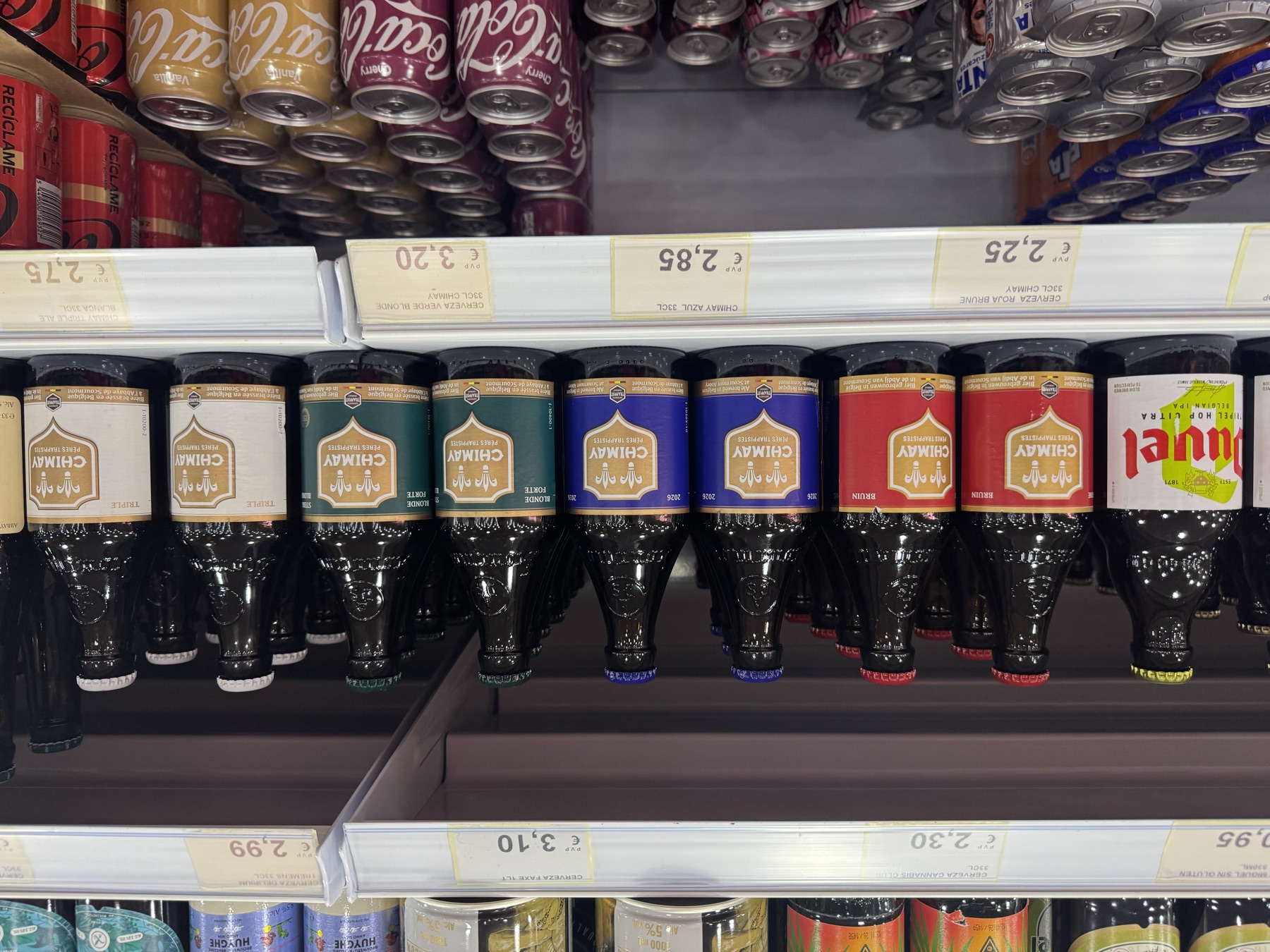
Chimay and Duvel at 2.25 to 3.20 euro in a Spanish supermarket.
Final word
I went over expecting scarcity and I found something more specific than that. There is still good beer being made in Britain, and I drank most of what I could reach. The problem is how little of it reaches a drinker who walks into an ordinary pub or an ordinary shop. It has been squeezed off the taps and down to two or three facings in a fridge, because the pubs are consolidating and the independents cannot get on the bar. In Ireland the beer is still in the pubs, and the pressure is coming from costs instead.
Which is the thing worth taking home. Australian independents built taprooms. We own our own route to market in a way British brewers largely do not, and a decade of doing that now looks less like a lifestyle choice and more like the reason the industry here still has a shopfront.
Next time I am taking two spare days and a list. Mescan, White Hag and Lacada are on it.
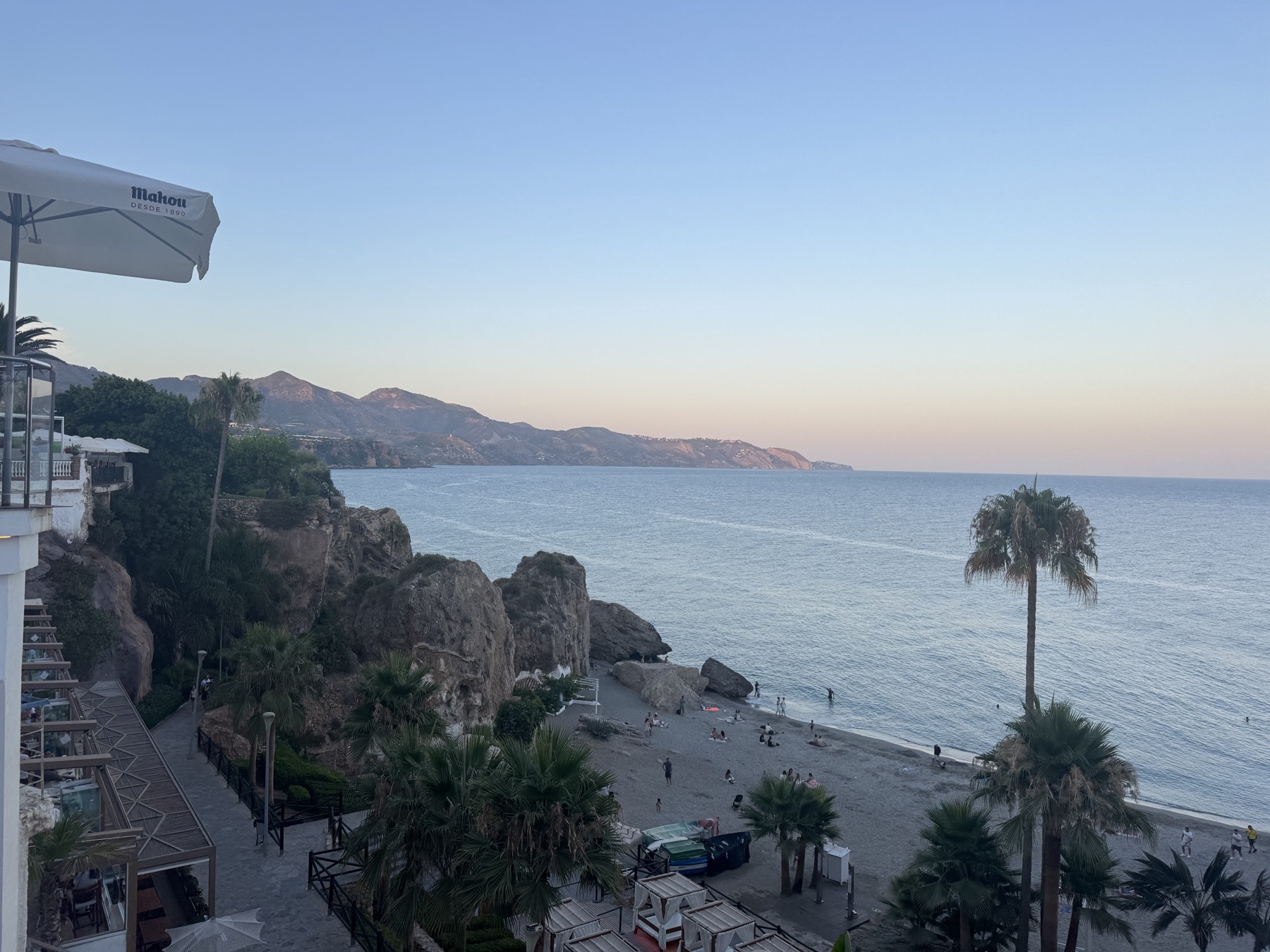
A quiet finish on Spain’s southern coast.
If you want to review your yeast program across your range, book a 15-minute fermentation planning call.