
I spent most of last month out of the country, so this recap is less about what we have been doing and more about what happened while I was away. It was a big two months for the Australian industry, and not much of it was good.
Three weeks in the UK, Ireland and Spain
It was a family trip, three generations of them, and the beer was very much the side quest. I still came home with a view. The short version is that I drank beer from twelve independent breweries in twenty one days, and in most places that was not a selection, it was the entire selection. Two or three cans in a fridge and I bought one of each.
The longer version, including what has happened to BrewDog, why cask is in trouble, and the moment a distillery tour could not answer my questions about yeast, is in the beer half of the trip. The family half has three generations, about sixty relatives and a surprise party nobody spoiled.
The blenderies are going
The news that landed hardest while I was away was Sobremesa. The Melbourne mixed fermentation producer called it a day on 22 July, less than six months after announcing a move to Reservoir. Co-founder Casey Grieve pointed to declining sales and a site that needed more investment than they had. Their own summary of the problem is the line I keep coming back to: being a niche within a niche is hard at the best of times.
They are not alone. Dollar Bill in Ballarat announced in March that they are closing and selling up, with Ed and Fiona Nolle retiring after ten years. That one was a decision rather than a collapse, and worth saying clearly, because they never went into administration. And in February, Topher Boehm announced Wildflower would leave its Marrickville home at the end of May and relocate to a wine region over a period of years, in his words to stop before he got to proper burnout.
To be accurate about it, Wildflower has not closed. They published five new blends on 8 July. But between a closure, a retirement and a hibernation, the corner of Australian brewing built entirely around mixed fermentation has had a rough year.
There is still good work happening. La Sirène are running coolship and solera beers out of Reservoir, where they have been since 2023. Two Metre Tall keep doing what they have always done in Tasmania. Slow Lane and Beer Fontaine, both in Botany, are releasing Brett and mixed culture beer this year. Sailors Grave down at Marlo has an actual coolship. Boatrocker’s barrel room put out a barrel aged saison on 15 July.
We are a yeast company, so this one is close to home. Mixed fermentation is the part of brewing that is furthest from a spreadsheet and closest to craft in the original sense of the word. It is also, on the evidence of the last twelve months, the hardest to fund.
What else happened while I was away
Six String entered voluntary administration on 10 June and came back out on 15 July when creditors approved a Deed of Company Arrangement. Chris Benson is a director again. Thirty five days start to finish, no buyer and no outside money, just a restructure. The brewery’s own words on it: “This has been one of the toughest periods in our history and there have been plenty of sleepless nights along the way.”
Black Hops went into administration on 21 July, for the second time in just over two years, after a sale collapsed. Chris Cook and James Robba of Worrells are appointed. Managing director Luke McCormack said the discussions “broke down at the 11th hour” and that the headwinds affecting the Australian independent brewing sector “have never been stronger.” Around 70 staff, three taprooms, still trading while a sale process runs.
Lion will stop brewing at James Boag’s in Launceston from November, affecting 42 positions, and is repaying the $1 million grant it received from the Tasmanian government. The IBA has formally asked the Premier to redirect that money to locally owned Tasmanian breweries instead, pointing out that Tasmanian breweries contribute over $138 million and more than 1,500 jobs.
Brouhaha closed its original Maleny venue at the end of June, ten years to the week after opening, with Baringa continuing. King River in the King Valley closed its Whitfield taproom indefinitely on 16 July, one of the eight breweries on the High Country Brewery Trail we wrote about in May.
The calendar has quietly fallen apart
This is the thing nobody seems to have written up as one piece, and it deserves to be.
In the space of about a year the Australian beer industry has lost its biggest consumer festival, its trade conference, its awards night and its flagship beer week.
- GABS did not run in 2026. Melbourne and Sydney were both paused until 2027, after Brisbane was dropped earlier.
- BrewCon has no 2026 edition. It was cancelled for 2025 and reported as postponed to 2026, and there has been no announcement since.
- The Indies are deferred to 2027, returning in a reformed shape focused on recognising people rather than judging beer.
- Good Beer Week could not be confirmed as running at all this year.
What has filled the gap is state associations and suppliers, and to their credit they have filled it well. The WA Beer & Brewing Conference in Fremantle on 3 July drew close to 350 people and 38 trade stalls in its seventh year, with UK writer Pete Brown as keynote. WABA chair Mike Morgan put it better than I could: “There’s a lot of doom and gloom talk out there which I do understand but WA has a heads down bum up attitude.”
The Australian Distillers Conference in Adelaide from 16 to 18 June pulled 430 delegates, 45 exhibitors and around 70 speakers, and launched an inaugural set of industry awards with David Vitale of Starward going into the Hall of Fame.
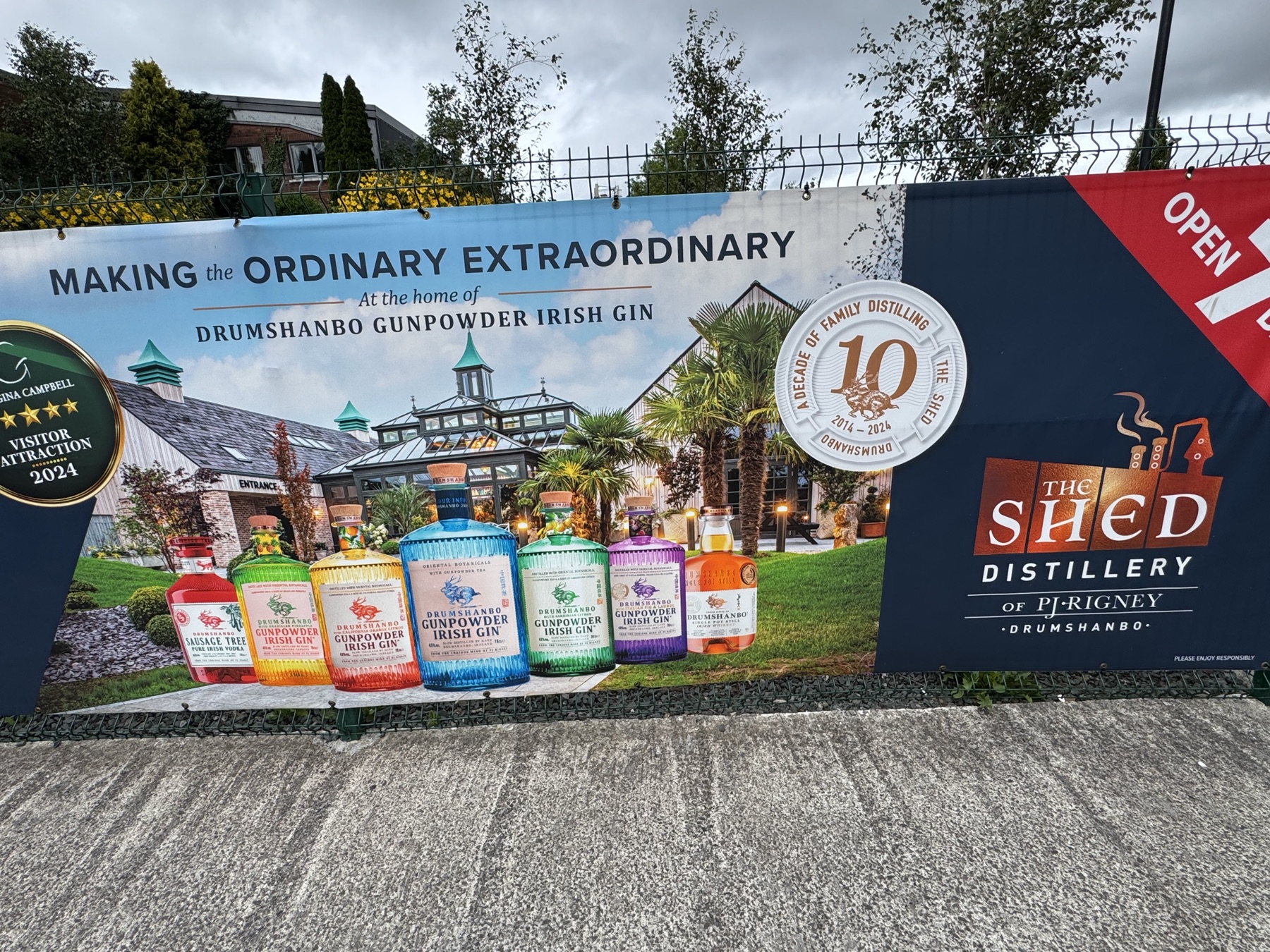
The Shed Distillery in Drumshanbo, where the tour finished with more questions about fermentation than it answered.
My read, and I will label it as a read rather than a fact, is that the national gatherings were the expensive ones to run and the first to go, and that the industry’s centre of gravity has moved to the states. That may not be a bad outcome. It is a different one.
The competitions that did run
The Melbourne Royal Australian International Spirits Awards announced results on 28 July with 1,048 entries from more than 250 distilleries, up from 115 entries in the competition’s first year, and 29 trophies. It took international entries for the first time. Maidenii took Champion Small Australian Distiller and Champion Victorian, which is worth pausing on given they lost equipment and stock in the Central Victoria fires in January. We wrote about those fires in February. Good to see that one land well.
The Royal Adelaide Beer & Cider Awards were presented on 2 July. Pirate Life’s US Hop Harvest Red IPA took Most Outstanding Beer in Show, Coopers took Champion Large Brewery for a third consecutive year and Brightstar took Champion Small. Chief Beer Judge Jeff Wright noted that traditional lagers are continuing their resurgence, which matches what we saw in the AIBA data in May and matches what we are seeing in strain demand.
And The Beer Championships, the new competition from Jayne Lewis, Justin Fox and Cass Cochrane, judged 260 beers from around 80 breweries in Williamstown, wrapping up on 22 July. No medals, seven consumer facing categories, up to six finalists each. Finalists are announced mid August and champions on 14 October. Lewis on why they built it: “A beer might win a medal, there’d be a social post and then everyone would move on. The recognition was there, but the commercial impact often wasn’t.”
The State of the Hops report, and what it does not say
Endeavour Group released its first State of the Hops report on 24 June. There is genuinely useful material in it. Mid strength has overtaken full strength as the top style by volume. Japanese lagers have passed Mexican cervezas. Stout is the fastest growing style nationally. WA buys craft at double the national average.
Then there is the headline number, which is that beer range at BWS and Dan Murphy’s has grown 165% over the past decade to 2,312 beer products.
I want to be careful here, because I am about to describe what I have seen with my own eyes rather than data I can hand you.
What I see when I walk into a chain bottle shop, and what brewers tell me every week, is the opposite of range growth. Independent beer is getting less facings, not more. SKUs are being cut and replaced with the retailer’s own craft labels. Brewers who were ranged two years ago are struggling to stay ranged. If you brew in this country you already know this, and you did not need me to tell you.
So how do both things get to be true at once? Here is what I can point to.
The 165% figure is published with no baseline year, no starting number and no definition of what counts as a beer product. Nobody outside Endeavour can check it. The 2,312 figure counts total products and says nothing about who those products come from. The independent share of it is not disclosed. When Endeavour defended itself on private label last year it said Pinnacle is “just 2.4 per cent of the total Australian craft beer range.” Coles, by comparison, has published that private label is 4.2% of its beer offering and that 70% of its craft range comes from independent breweries. Endeavour has not published the equivalent.
The IBA’s Richard Adamson has put it at “one in five to one in four shelf spaces for beer is now one of their privately owned private label brands.” An OC&C consumer study of more than 5,000 drinkers last October found the majors “have over-emphasised own- and exclusive-label products at the expense of the known brands younger legal drinking aged consumers are looking for.”
And the report arrived four weeks after Endeavour’s investor day on 27 May, where the ASX lodged deck talks about tailoring the product mix, freeing up space, and significant variability in profitability per linear metre.
I am not saying anyone lied. I am saying a decade long growth statistic that nobody can verify was published a month after the same company told its investors it intends to reallocate shelf space, and the one organisation holding data that could reconcile that with what every brewer in the country is experiencing is the company that published the report.
That is the IBA’s actual argument, and Sabrina Kunz made it plainly: “When one company controls both the shelf and the information about the shelf, small producers at the bottom of the chain carry the cost.” She has to work with Endeavour, so her language is measured. Mine does not have to be.
One piece of good news
The excise remission cap increase took effect on 1 July. The IBA puts it at an extra $50,000 of remission capacity for each of the 619 independent breweries in the country, around $30.95 million across the sector. They point out they achieved it with two full time staff and an advocacy budget under $5,000, and that roughly 40% of independent breweries who benefit are not members. If you are in that 40%, this is the argument for joining.
Looking ahead
Ekka runs 8 to 16 August, its 150th year. Beer Championships finalists land mid August. The IBA has a webinar on brewery food safety with Athena Quality on 25 August, which is the only quality and lab session on the calendar between now and November and is worth your time. Sydney Royal Beer & Cider judges 31 August to 1 September with results on 17 September. Australian Cider Awards judge on 6 and 7 October and present on 15 October. Sydney Beer Week runs 16 to 25 October. Beer & Brewer Awards are on 20 October.
Last word
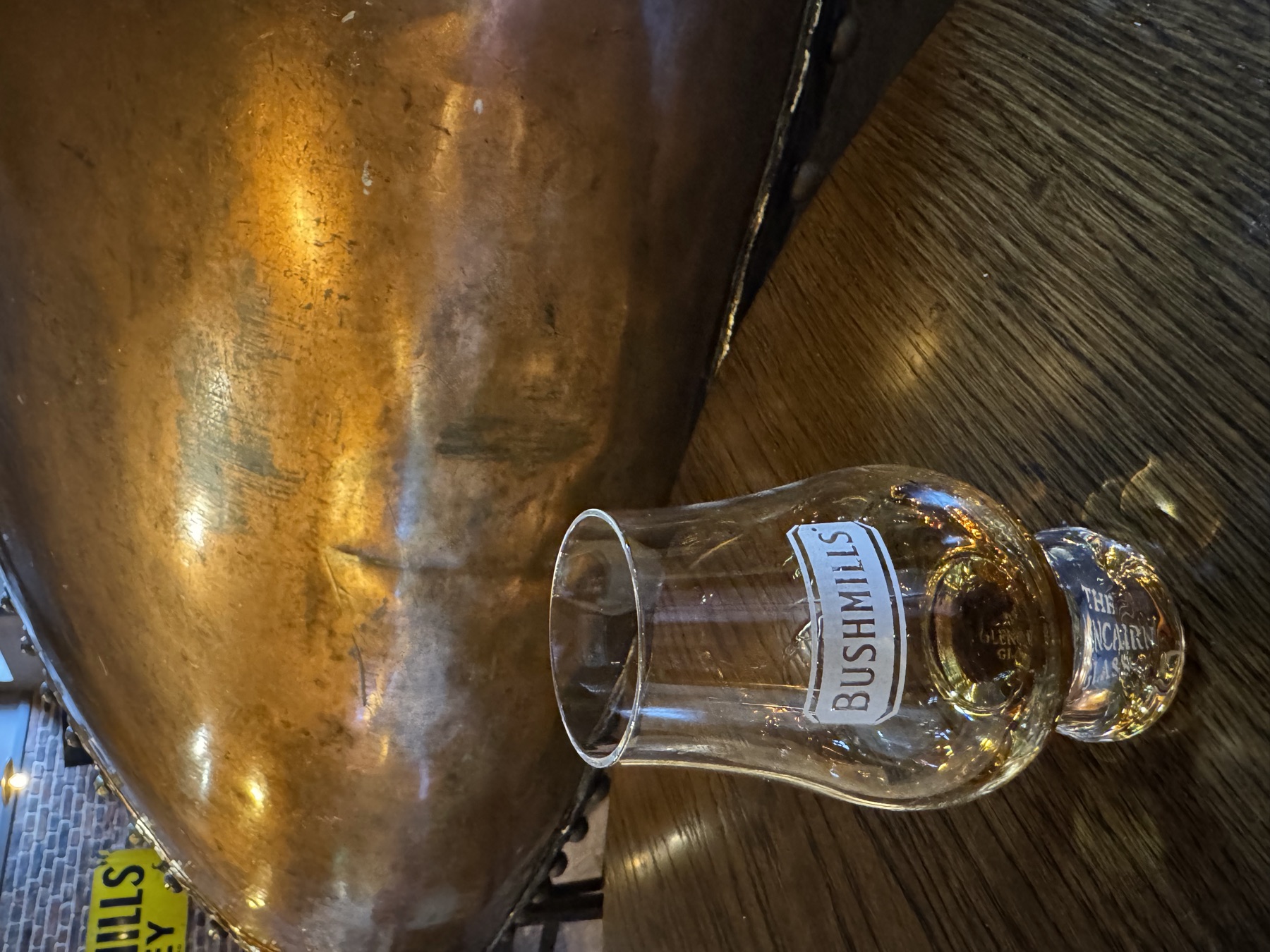
Two distilleries on this trip walked me past the fermenters on the way to the stills, and the stills got the copper, the drama and the photographs. When I asked about yeast, nobody had an answer.
That is not a criticism of them. It is the same blind spot that shows up in brewing, in a year when everyone is looking at costs and shelf space. Fermentation is where the flavour is decided, and it is the cheapest place in the process to improve an outcome. If the last two months have made anything clear, it is that the margin for a mediocre ferment has gone.
If you want to review your yeast program across your range, book a 15-minute fermentation planning call.